Desk pool vs Hot desking


How seat-based workspace booking can provide the structure lacking in hot desking policies at large hybrid headquarters while keeping desk booking simple and fast.
While hot desking breaks down at scale because it creates uncertainty, uneven usage, and limited data for workplace teams, seat-based booking in desk pools enables capacity control and creates better utilization insights.

What is desk booking?
Desk booking is the process of reserving a works before coming to the office. In hybrid workplaces, it helps employees secure a seat and helps workplace teams manage office capacity more predictably.
Hybrid work has transformed how large organizations use their headquarters. Space optimization and new practices have often led to offices with fewer workstations than their staff number. Yet employees still expect a reliable, comfortable workspace when they come to the office.
Many companies initially adopt hot desking: an open, first-come-first-served system where desks are not assigned, and no booking is required. While simple in theory, this approach often breaks down at scale.
Therefore many large enterprises have implemented desk booking solutions, which are based on a more structured model. Among them, seat-based booking systems for offices are halfway between hot desking models and fixed desk booking ones.
The limits of hot desking in large hybrid offices
Hot desking works best in small or highly flexible environments. But in large headquarters where hundreds or thousands of employees may arrive unpredictably, it introduces several problems:
- Uncertainty for employees: people arriving at the office cannot be sure a workstation will be available.
- Uneven workspace utilization: some areas become crowded while others remain empty.
- Lack of team proximity: colleagues cannot easily sit together.
- No data on workspace usage: facilities teams have little visibility into real demand.
For enterprises trying to make hybrid work sustainable, this lack of structure quickly becomes a productivity and experience issue.
How to organize desk booking
When moving away from hot desking, organizations typically have two main approaches to structure desk booking:
1. Individual desk booking
Employees select and reserve a specific workstation ahead of their office day. This model gives maximum control over workspace choice and is well-suited for teams with strong desk preferences or specific equipment needs.
2. Seat-based booking within a desk pool
Rather than picking a precise desk, employees reserve a seat within a defined space (also called a desk pool). The system guarantees availability within a zone without requiring employees to identify a specific workstation. This model is lighter to manage, faster to book, and scales naturally across large headquarters with multiple floors or team areas.
Both models can coexist within the same organization: some spaces may be managed as individual bookable desks (e.g., ergonomic stations or private offices), while open collaborative areas are handled as desk pools with seat-based reservations.
What is a desk pool?
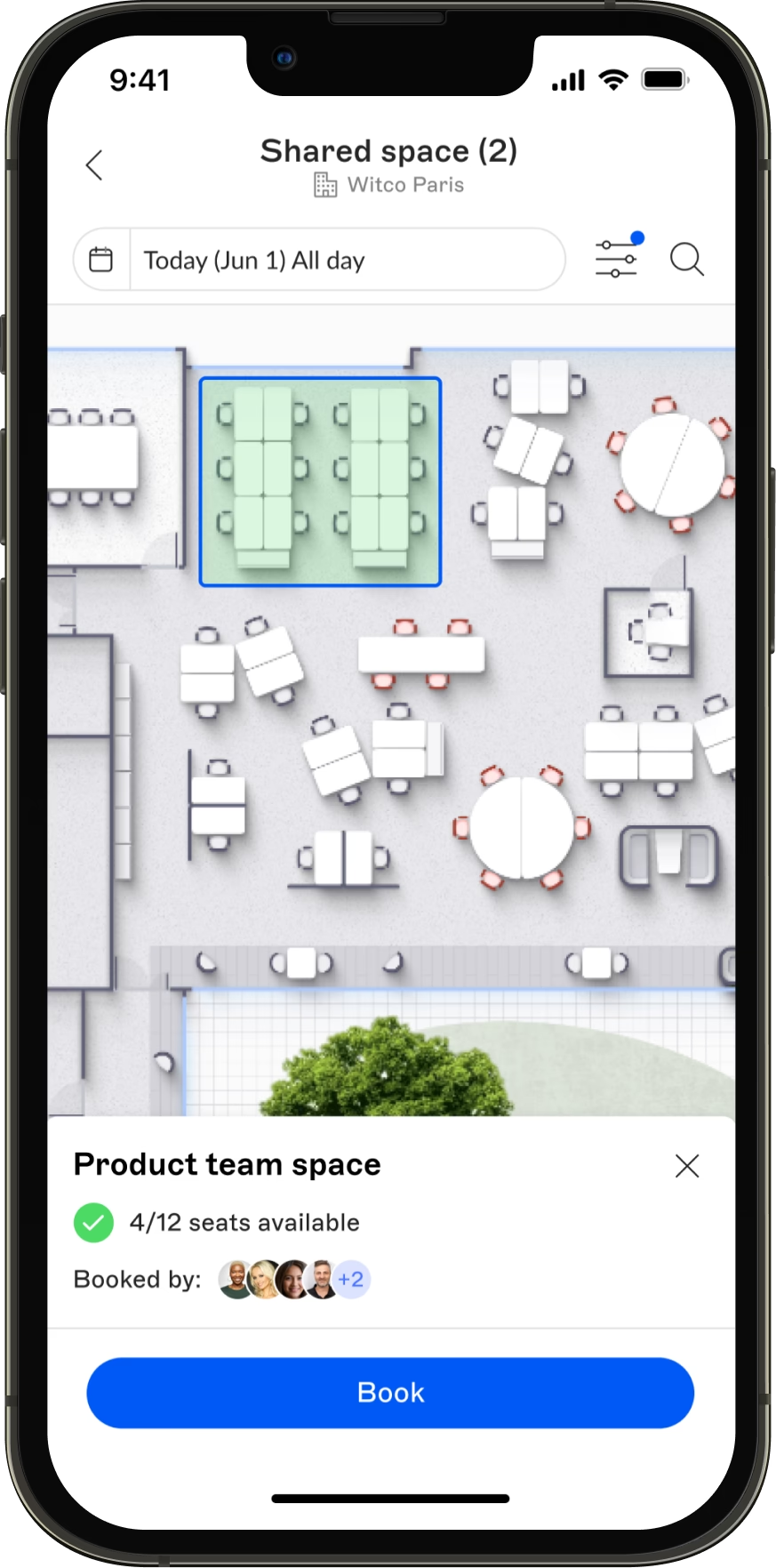
A desk pool groups a number of workstations into a shared workspace with a defined seating capacity. Instead of booking a specific desk, employees reserve a seat within the pool.
Key characteristics of desk pool booking include:
- Seat-based workspace bookings instead of individual desk assignments
- Workspace seating capacity limits based on the number of available seats
- Time-based booking (typically day or half-day)
- Office space discovery through a map view
This model introduces lightweight structure without removing flexibility.
Key advantages of seat-based workspace booking
1. Guarantee a workstation for every employee coming on site
One of the biggest frustrations in hot desking environments is uncertainty.
Desk pools solve this by allowing employees to reserve a seat before arriving at the office. When they show up, they already know a workstation is available within their chosen area.
For employees, this means:
- Less stress about finding a place to work
- More predictable office days
- A smoother hybrid experience
For companies, it ensures that office visits are productive rather than chaotic.
2. Organize workspaces by team or functional pools
Large headquarters often contain multiple types of spaces: team neighborhoods, project areas, quiet work zones, departmental floors, etc.
Desk pools allow organizations to structure the workplace into logical zones. Each pool can correspond to a team space or functional area, with its own seating capacity.
Benefits include:
- teams can sit near each other
- departments can manage their own shared workspaces
- office layouts stay organized even with flexible seating
Instead of random desk selection, employees choose the area that fits their workday.
3. Manage capacity with a seat-based booking system for offices
A key advantage of desk pools in hybrid offices is capacity control.
Each shared workspace has a defined number of seats. Once the shared space reaches its capacity, no additional bookings are allowed. This prevents overcrowding and ensures that the physical space matches the number of reservations.
Over time, facilities teams can also adjust capacity, allocate more seats to high-demand teams, or balance office occupancy across floors or buildings. This makes seat-based workspace booking a powerful tool for flex office management and workspace planning in large enterprises.
4. Support simple time-based booking
Hybrid workspace management rarely requires hour-by-hour desk scheduling. Most employees simply need a workspace for a half-day or the full day.
Seat-based booking system for office typically support day or half-day reservations, which keeps booking simple while providing enough flexibility for hybrid schedules.
This approach:
- avoids overly complex scheduling
- matches common hybrid work patterns
- makes booking fast and intuitive
Employees can reserve their seat in seconds.
5. Improve workplace data and utilization insights
Unlike hot desking, using a desk pool booking app generates valuable data.
Facilities and workplace teams can analyze:
- which areas are most popular
- peak office days
- seat utilization rates
- team presence patterns
These insights help organizations take data-driven decisions on office layout optimization, desk capacity adjustements, future workplace investments, and much more.
6. Balance flexibility and structure
The real strength of desk pools in hybrid offices is that they strike the right balance between flexibility and organization. It brings structure to the workspace organization with a lightweight booking flow that is quicker for employees compared to booking a specific desk.
Employees can rely on clear workstation availability while still enjoying the freedom of flexible seating. From a workplace perspective, resource availability remains predictable and manageable for large organizations.
How Witco workplace central platform handles seat-based workspace booking
At Witco, we believe that adoption of a desk booking system depends on one thing: people booking from workflows they already navigate. In concrete words, a seat-based booking option can be surfaced in multiple entry points, for example:
- From the resource Reservation experience (well-known from employees to book meeting rooms)
- From the Map (visual, floor-based discovery, allowing employee to view free resources at a glance and select the one to book)
- From Attendance (after registering “On site” presence status, employees can book a seat)
This matters because it turns booking into a natural step, not a separate chore.
Included in Witco all-in-one workplace experience platform, our seat-based booking system for offices also serves a better team coordination with “who is already there” visibility. Instead of booking scattered desks across a floor, users can see who already booked into a shared workspace (for example, via avatars and a participant list).
For hybrid offices, that means team members can sit near each other without complex planning, making office days become more social and intentional.
Desk pools: the scalable model for hybrid headquarters
As hybrid work becomes the norm, enterprises need workplace models that scale. Hot desking may work in theory, but large headquarters require capacity management, visibility, and predictability.
Implementing desk pools in hybrid offices delivers exactly that.
By organizing workstations into shared workspaces with simple day-level reservations and visual workspace maps, organizations can create offices that are flexible for employees and manageable for workplace teams with true benefits:
- Control over workspace seating capacity per zone
- Reduced friction with seat-based workspace booking
- Support of hybrid workspace management with simple flows
- Modern desk booking system that people will actually use
In hybrid work, the best desk booking system is not the most complex one. It is the one that makes booking feel effortless while keeping capacity predictable.
Frequently asked questions about desk booking
What is a desk booking system used for?
How does desk booking improve hybrid work?
What is the difference between desk booking and seat-based booking?